

Gemma Caballé: The academic compass guiding the real estate sector
Dr. Gemma Caballé breaks down intermediation models, anticipates the humanised future of the real estate sector and reveals her groundbreaking research on housing and gender.
At Monapart We are always looking for the brightest minds to illuminate the complex and often opaque world of housing. And few figures shine with such clarity and rigour as Dr Gemma Caballé.
This article is born, precisely, from an enriching interview we did with Gemma, offering us her privileged and deeply informed vision. She is a rara avis She is a Spanish academic whose dedication to research in the field of real estate brokerage and housing policy makes her an essential voice for understanding the present and anticipating the future of the sector.
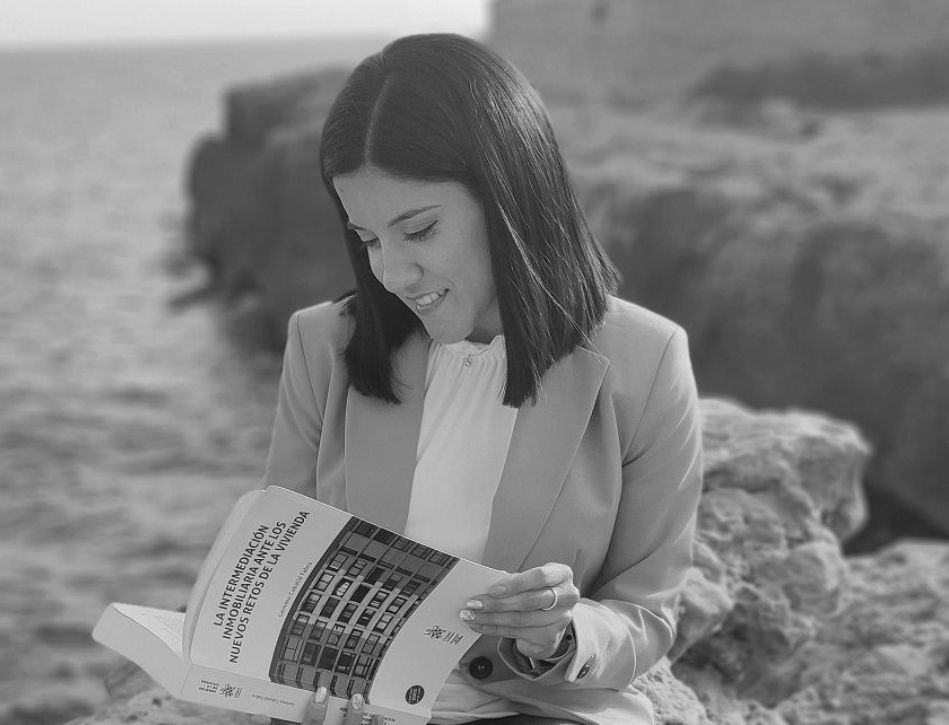
Gemma Caballé is no ordinary academic. Her career is a testament to excellence and commitment: Law graduate, Master's degree in Business Law and Doctor of Law, all with the highest distinctions.
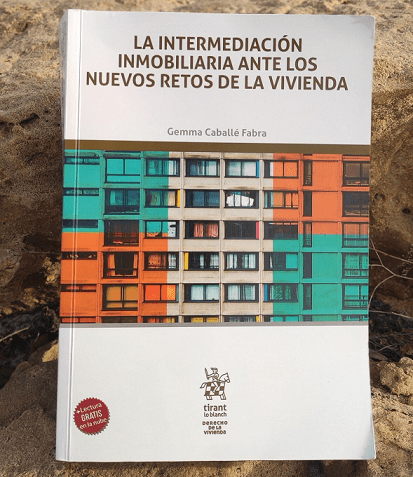
In a field where academic literature is scarce, Gemma's research is not only pioneering, but also positions her as a reference with her doctoral thesis: “Real estate intermediation and the new housing challenges”.
Its deep connection to the world of housing is also manifested in its role in the UNESCO Chair in Housing at Rovira i Virgili University. There, Gemma is a postdoctoral researcher and plays a key role as a lecturer in relevant postgraduate programmes such as «Real Estate Agent and Property Management» and «Public Housing Policies».
In addition, he shares his knowledge as Professor of Civil Law both at the URV and at the Universitat Oberta de Catalunya (UOC), consolidating her profile as a leading academic in the field. full time dedicated to housing and intermediation.
Unravelling real estate brokerage models:

One of the most relevant points that Gemma addresses in her research is the following the urgent need for a legal framework that explicitly recognises the different models of real estate intermediation operating in reality.
In a constantly evolving sector, current regulations sometimes do not reflect the diversity of practices and roles. Gemma identifies and analyses in depth four main ways of practising the profession, each with its particularities, advantages and disadvantages.
It resembles a court litigation where each party has its own lawyer, negotiating with each other to reach a settlement. Here, each party is responsible for the remuneration of its respective agent, which simplifies the contractual structure.
Gemma emphasises that, even if the buyer is not his client in the strict sense, the agent must act with full transparency. This means making it clear to the buyer that the client and fee-payer is the seller.
However, the agent is obliged to comply with the pre-contractual information requirements imposed by regulations such as Article 31 of the State Housing Act and, if the buyer is a consumer, all consumer protection regulations. It is vital for the agent to be aware of these limits and rights to avoid misunderstandings and future complaints.
The agent, when hired by the buyer, can proactively look after the buyer's interests, investigating aspects such as the orientation of the property, the proximity of essential services (hospitals, schools) and even questioning details that are not required by regulations, thus justifying a fee for a value-added service.
Gemma points out that the Civil Code of Catalonia, when regulating the mandate, already foresees this situation of the «double mandate», requiring impartiality from the mandatary (the agent) and the obligation to communicate it to both parties. In order to guarantee this impartiality in practice, Gemma suggests a very clear and transparent delimitation of the services to be provided to each party.
While some agents may be uncomfortable with this model, others find it an efficient way of working, taking remuneration from both parties and offering specific services for each.
Gemma insistently stresses that there is no «better» or «worse» model». All are valid and can work effectively. The key, in any of the four cases, lies in transparency.
It is essential that the agent explains from the outset who he works for, what services he offers to each party and who pays him. This clarity not only avoids confusion, but also ensures legal certainty and client confidence.
His proposal, and one of the conclusions of his thesis, is clear: the first step to improving the sector is for legislation to recognise and cover these four situations, providing a clear legal framework that defines what is expected of an estate agent in each of them.
Humanisation vs. digitalisation and the urgency of training
As for the future of real estate brokerage, Gemma maintains a clear vision that she already put forward in her 2019 thesis. At a time when the boom of the agencies online seemed to redefine the sector, and now with the irruption of the artificial intelligence, The question of the role of the estate agent is more pertinent than ever. Gemma, however, is firm in her conviction.
“The humane treatment will not only be maintained, but will be revalued, becoming a «luxury» with a higher price tag.
Human contact, empathy, empathy active listening and the negotiating skills are soft skills that no machine will be able to replace and which, paradoxically, will become invaluable. Buying a home is one of the most important decisions in a person's life (it is estimated to be bought once or twice), and the need for personalised advice, trust and support will continue to be a key driver.
The new technologies, far from replacing the agent, will become tools that will enhance and improve his or her functions, but will the personal and experiential element will remain irreplaceable.
On the other hand, Gemma's comparison with other European countries in her research, especially those with Latin notarial systems such as France, Belgium, Italy or Germany, reveals a major unresolved issue in Spain: the compulsory training and a institutional oversight of the profession.
It is striking that, given that housing is one of the main concerns of Spaniards, there is no official university qualification in this area that ensures minimum competences for all professionals in the sector. In other countries, it is compulsory to accredit specific training in order to practice.
“It is essential to ensure that those involved in the real estate sector have the right knowledge and skills, beyond vocation or empirical experience”.
Gender-sensitive housing
Gemma Caballé gave us an exclusive preview of her fascinating new line of research: the gender perspective in housing.
This is a study in its initial phase that seeks to analyse how gender affects and impacts the different phases of the housing cycle. From architectural design - for example, how the location of the kitchen can influence the participation of household members - to access to housing and residence.
This research, which will include interviews with professionals in the sector (real estate agents, property managers, architects) and nationwide surveys, will explore how the latest legislative reforms aimed at protecting vulnerable groups (such as women or single parents with children) actually impact on their access to housing. The aim is to determine whether these measures succeed in protecting or, on the contrary, generate discrimination or undesired effects. In addition, data will be analysed on loneliness, a growing problem that mainly affects older women living alone, and how housing can be a determining factor in this problem.
Gemma emphasises the importance of this research being based on rigorous data, statistics and reports, to avoid the debate becoming politicised or based on ideologies. Her aim is to provide an informed vision that will allow us to propose long-term solutions to such a complex problem as housing, which, as she points out, is intrinsically connected to health, employment, territorial cohesion and mobility.