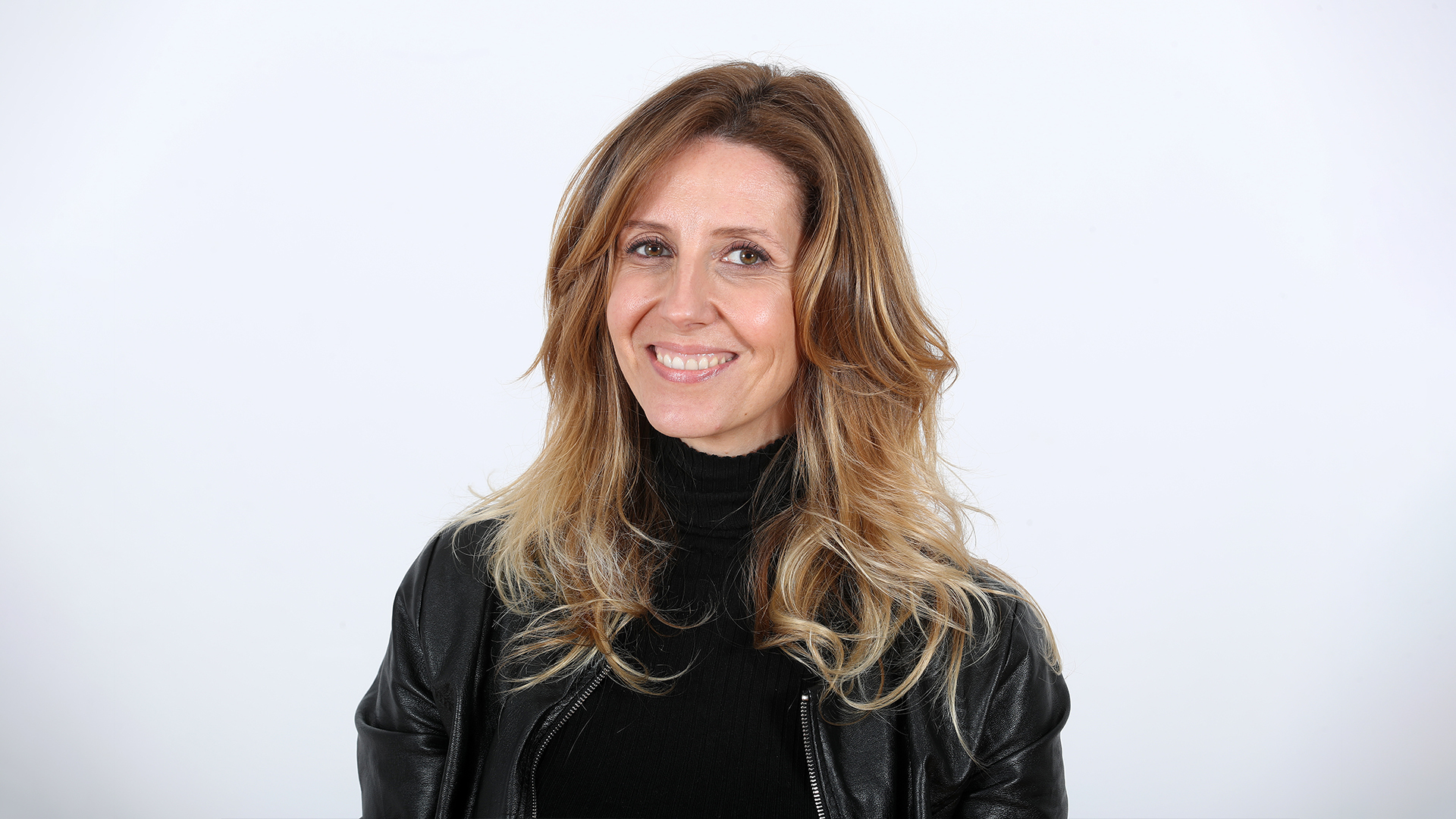

Carol Murtra: «Social marketing isn't about selling, it's about making people love you»
The founder of Milky Way and pioneer of influencer marketing in Spain explains why the real asset of a real estate agent is not their portfolio of properties, but the community that trusts them.
There are female experts who talk about social media from the perspective of the quick fix and the shortcut, and others who do so from strategy and patience. Carol Murtra belongs to the latter.

With over twenty years' experience in strategic marketing, she is the founder and CEO of Milky Way, one of the leading influencer marketing and social media agencies in Spain. Her portfolio includes brands such as Nespresso, AliExpress, Vueling and Aldi.
Murtra sat on the fifth edition of our podcast Real People to talk about the loudest and most filtered channel of all: social media. And he left a thesis that goes against almost everything preached in real estate marketing: On social media you don't win by selling more, you win by connecting better.
The problem is not that there's a lack of content, it's that there's a lack of truth
When you look at estate agents on social media, Myrtle go a sector in full transition.
On the one hand, many professionals trying to create content to stand out, something to be celebrated. On the other hand, an awful lot of noise: superficial content, recycled magic formulas and quick tricks that look for immediate results but they don't build anything for the long term.
Her diagnosis is categorical: the problem isn't that content is lacking, it's that There is a lack of truth.
The temptation to optimise everything towards short-term sales creates the exact opposite of what is intended. Instead of connection, it produces distance. Because the real estate business it remains profoundly humanit's about trust, intuition, about feeling that someone understands you.
«Social marketing is not about selling, but about making yourself liked.»
An affinity business, not a volume business
The organic acquisition it's still viable, he insists, but not like before, when it was enough to open a profile and upload pretty photos.
Now the key is to create content with intention, direction and, above all, perseverance. Many do not reap the fruit of their effort simply because they get tired beforehand and give up.
Here he introduces a distinction that changes everything. A T-shirt can be sold to a million different customers; a property, to only one buyer. Property is not a volume business, it is an affinity business.
The toxic relationship with the algorithm
Regarding the pressure to feed platforms 24/7, Murtra is blunt: we have a toxic relationship with algorithms, and the first step to get out of it is to become aware.
If we feel we have to post continuously so as not to be penalised, then something has been approached wrongly from the start. Because there is something that the algorithm penalises more than not posting: to post and have nobody care.
Logic is the engagement —the likes, the comments, the saves—, the way the community validates that what you publish adds value. And that it has nothing to do with how many times you post a week.
The conclusion is liberating: you have to obsess over generating value, not frequency. The algorithm is a means, not an end.
Every agent is already a micro-influencer
For Carol, the agents' big opportunity lies precisely in the small things, and unashamedly.
Against the obsession with big numbers, he advocates building a quality community: 500 or 1,000 people who genuinely care about you and who can become clients, brand advocates or allies. In that, the micro-influencer and the estate agent are more alike than we thinkboth build on trust and niche.
His recommendation is that each agent accept oneself as a micro-influencer already and work on your personal brand from a clear editorial line.
If you specialise in flats in a specific neighbourhood for young couples, your content shouldn't just be about flats, but about what it's like to live there: which pubs open on Sundays, how long the tube journey takes, what it's like to raise a child in the area. The more niche, the better.
Do not interrupt the scroll, enrich it
One substantive objection remains: social networks are environments of escapism, and buying a home is a high-involvement decision. Isn't that a head-on collision?
«It’s a mistake to think that because we sell something serious, we have to communicate it in a serious way. The problem isn’t the channel; it’s the tone.»
Every high-involvement purchase begins as a dream, and that dream can indeed be appealed to on social media: imagining life with more light, more space, fewer neighbours.
Your content might appear to someone at midnight, between fits of laughter, showing them the flat they had been looking for without knowing it. The key is not to interrupt the scroll, but enrich it.
And the TikTok dances and the fear of looking a fool? Her stance is crystal clear: Professionalism is not incompatible with approachability; what is incompatible with it is looking ridiculous.
The problem is not whether or not to dance, but doing so without purpose, without strategy and without identity. The fact that a format was born on a platform doesn't force you to imitate it to feel authentic. Authenticity lies in not contradicting what the customer expects to see from you in real life.
Getting loved: the method on social media
«Use social media as if it were a WhatsApp group with your best friends.»
With them you would make sure that everything you share added value, so that you aren't branded as a bore. You'd find it odd to share something and have no-one react. And if someone replies to you, you would do something with that feedback to improve.
The networks, he concludes, They are not the enemy. They are full of opportunities. You just have to adapt the narrative, be a bit more demanding of oneself and not forget what has always worked: the human relationship.
Because in the end —and this is perhaps the best synthesis of his method— business does not come when you chase the sale, but when you stop chasing it to, simply, make yourself liked.