

Fernando de la Rosa: «The narrative eats the data for breakfast»
The digital strategist and tech communicator debunks the myths of real estate big data and explains why no amount of data, no matter how solid, changes a pre-formed opinion.
There are experts who arrive at a topic with the promise of simplifying it, and others who arrive to complicate it a little more, in a good way. Fernando de la Rosa, better known in the digital world as Titonet, belongs to the second category. A digital strategy professor, co-founder of Foxize School, consultant and speaker, he has spent more than twenty years helping companies understand the present in order to conquer the future. He has written three books about data —Data, Data-driven decisions y What do you want data for if you then ignore it?— and publishes the newsletter weekly Titonet Pills.

De la Rosa sat down in the fourth edition of the Gente Real podcast to talk about one of the most valuable — and perhaps most misunderstood — assets in real estate: data. He did so without the topic's usual solemnity, and with a thesis that is as unsettling as it is clarifying: having more data does not make us make better decisions if we do not first know what to ask of them.
A datum is a means, not an end
The real estate sector, De la Rosa explains, suffers from a fundamental problem with data: public data are neither unified nor harmonised, and private data are in the hands of an oligopoly — the portals — which use them to construct a self-serving narrative. Faced with the temptation to pursue the macro vision, that of the entire market and the whole of Spain, his advice is to pull back: around its own business, every agency has more data than it thinks it needs.
The filter he proposes is simple: A data point is a means to an end, never an end in itself. Instead of accumulating information, it suggests starting with the question that is really worrying you, and only then going out to find the fact that answers it.
«Having more data doesn't make us make better decisions if we don't know what to ask them first.»
The narrative completely eats the facts for breakfast
The conversation takes a turn when he puts his most provocative diagnosis on the table: contrary to a deeply rooted belief, no piece of data has any power of conviction. He illustrates this with an example from outside the sector, that of flat-earthers: there is no piece of data capable of changing the mind of someone who has built their social identity around a belief.
Translated to real estate, the message is uncomfortable but useful: when someone already has a narrative firmly in place — about the market, about prices, about the sector — presenting them with contradictory data rarely works. At best, a single well-chosen piece of data can open a crack and sow doubt in someone who doesn't yet have an entirely closed opinion. Persuading, he insists, is almost never a realistic objective.
The bad references we carry around without knowing it
One of the most revealing points of the talk has nothing to do with the real estate sector, but rather with everyday life. De la Rosa recalls that the eight hours of sleep we all use as a yardstick were born out of an early 20th-century trade union demand, not any scientific study on rest. The ten thousand daily steps, another classic, come from a Japanese advertising campaign from fifty years ago.
And the same thing happens in the business arena: the previous year's budget, he points out, «is an act of inventiveness», and a conversion rate calculated on ten transactions a year is not a probability, it is practically random. His conclusion is that we carry over poorly constructed benchmarks without ever questioning them, and that this habit of not checking the origin of data makes us make worse decisions than we think.
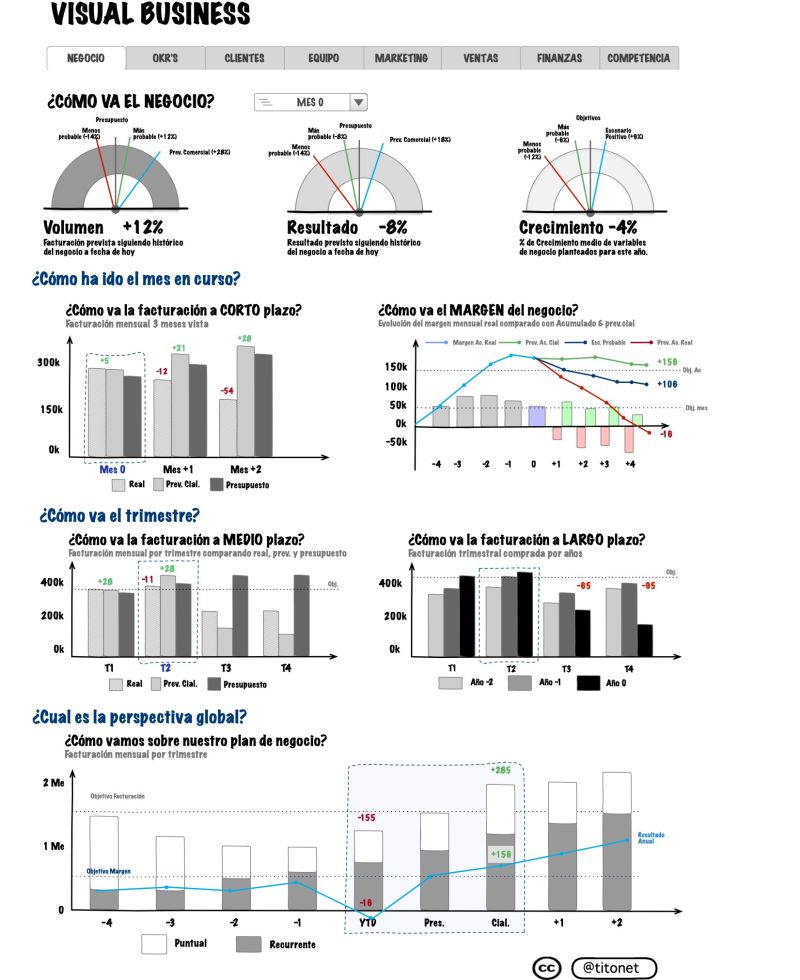
The small data that counts too
For small agencies —the vast majority in Spain, as the podcast itself points out, some 56,000 with three people or fewer— there is the temptation to think that working with data is something for large structures, Big Data and Excel. De Ross debunks this: the problem is not one of size, but of habit.
He proposes normalising the relationship with data by taking it out of the exclusively professional sphere, and learning it—or rather, practising it—in the same way one practises a skill. His recommendation is to start with a personal hobby—he does this with tennis, where he claims to have a more meticulously maintained dashboard than that of his own company—and then transfer that same curiosity to the business.
The master key: put on your data glasses
When they are asked for a single piece of advice for agents who want to change their relationship with data, De la Rosa Think of a simple image: invisible glasses that, once you put them on, allow you to see data everywhere — in the week's probability of rain, in the conversion rate, in any figure that previously went unnoticed. It's not about learning data all at once, but about starting to look at them where they already are.